Spiny brittle star
Ophiocoma erinaceus
Family : Ophiocomidae
The spiny brittle star is a fragile starfish with long spiny arms, highly valued in reef aquariums for its scavenging role.
Description
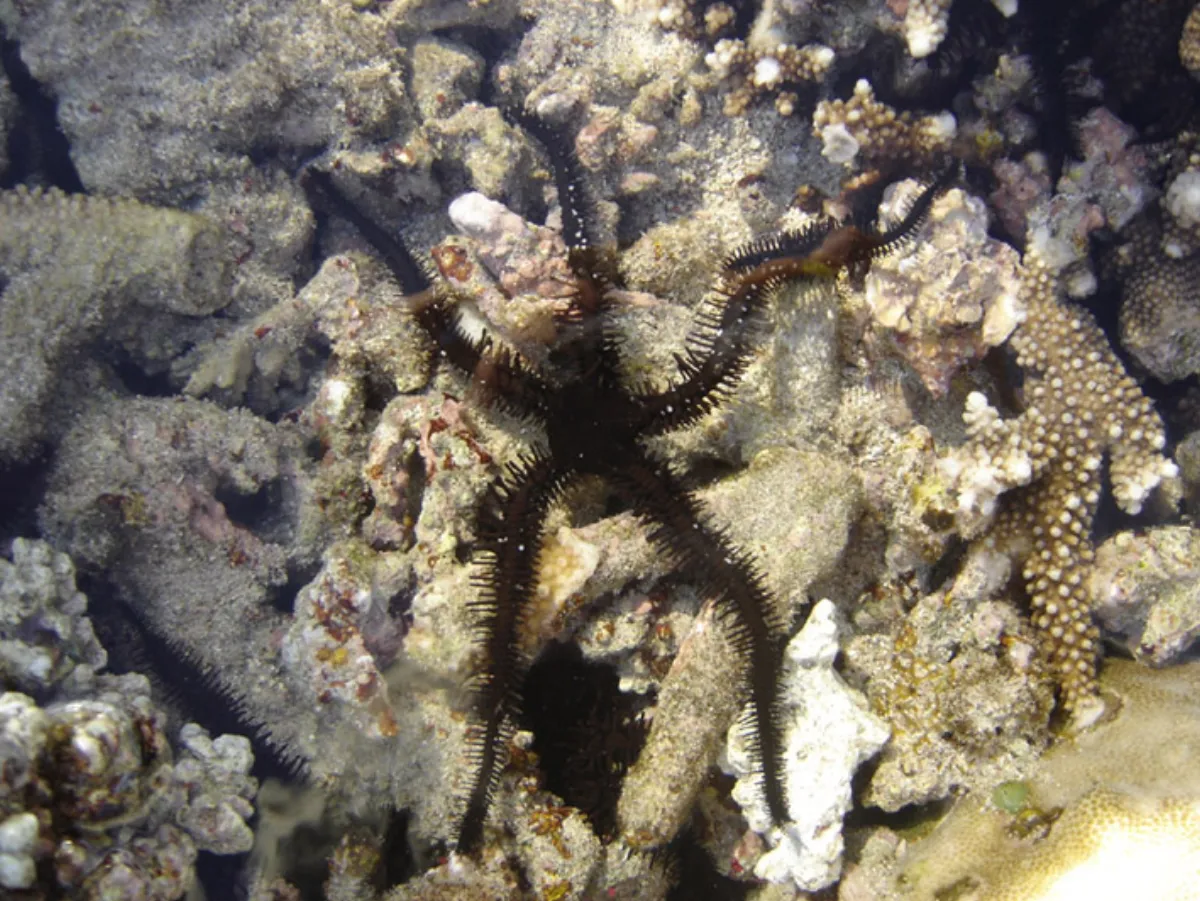
Ophiocoma erinaceus has a central disc up to 2–3 cm in diameter and very long, slender arms that can extend up to 20 cm. The arms are covered with robust, movable spines, giving it its common name. Coloration ranges from dark brown to gray, often with marbled or spotted patterns. It is a nocturnal species that hides during the day and emerges at night to feed. There is no obvious sexual dimorphism, but sexes are separate. It moves quickly across the substrate using its flexible arms.
Habitat
Region :
The spiny brittle star inhabits shallow coral reefs, often hiding under rocks or in crevices during the day. It prefers areas with strong water flow and sandy or rocky substrate. It is also found on reef flats and in lagoons. It is nocturnal, emerging at night to feed on detritus and small prey.
Distribution :
Recommended parameters
Care
Care notes
A minimum 30-gallon (120 L) aquarium is recommended, with a sandy substrate and plenty of live rock hiding spots. Water parameters should be stable: temperature 22-26°C, pH 8.1-8.4, salinity 1.023-1.025. It feeds on detritus, leftover food, and small prey; supplemental meaty foods (mysis, brine shrimp) are beneficial. Compatible with most fish and corals, but may threaten very small shrimp or fish if underfed. Avoid copper-based treatments and sudden salinity changes.
Similar species
Espèces proches, même habitat ou même maintenance

