Percula clownfish
Amphiprion percula
Family : Pomacentridae
Small bright orange fish with white bands, famous for its association with sea anemones. Very popular in marine aquariums.
Description
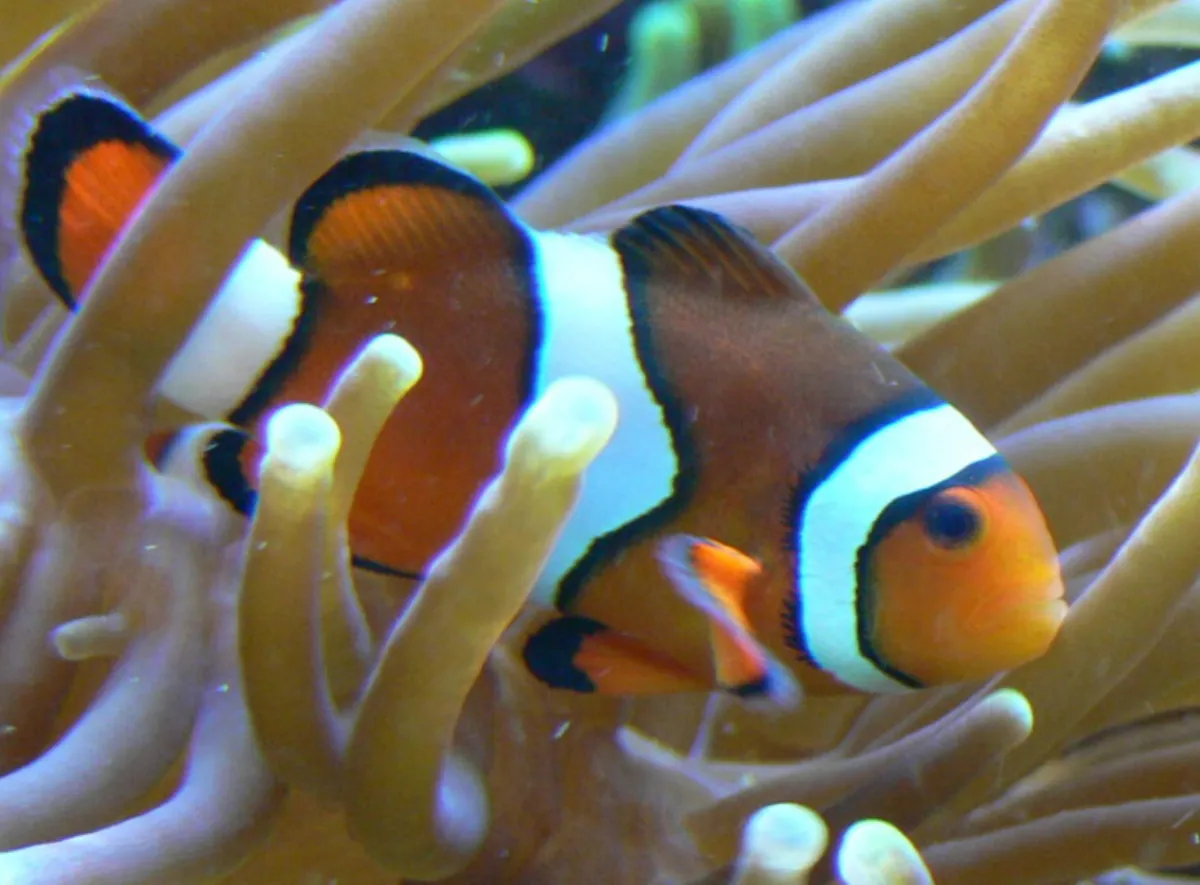
The percula clownfish grows up to 11 cm. Its body is bright orange with three white bands edged in black. The caudal fin is rounded. It exhibits sexual dimorphism: the female is larger than the male. It is a territorial fish that defends its anemone. It communicates through clicking sounds and postures. In aquariums, it can live without an anemone but adapts to other substitutes.
Habitat
Region :
The percula clownfish inhabits shallow coral reefs, often in symbiotic association with sea anemones of the genus Heteractis or Stichodactyla. It prefers clear, calm waters of lagoons and reef slopes. Juveniles hide among the stinging tentacles of the anemone, which provides protection from predators.
Distribution :
Recommended parameters
Care
Care notes
Temperature 24-28°C, pH 8.1-8.4, salinity 1.020-1.025. Minimum tank size 100 liters. Omnivorous: feed with brine shrimp, mysis, and flake food. Compatible with other peaceful fish. Avoid aggressive fish. Introducing an anemone is recommended but not mandatory. Captive breeding is possible with a formed pair.
Similar species
Espèces proches, même habitat ou même maintenance


