Yellow tang
Zebrasoma flavescens
Family : Acanthuridae
An iconic reef fish with a bright yellow body and high dorsal fin. Very popular in reef aquariums.
Description
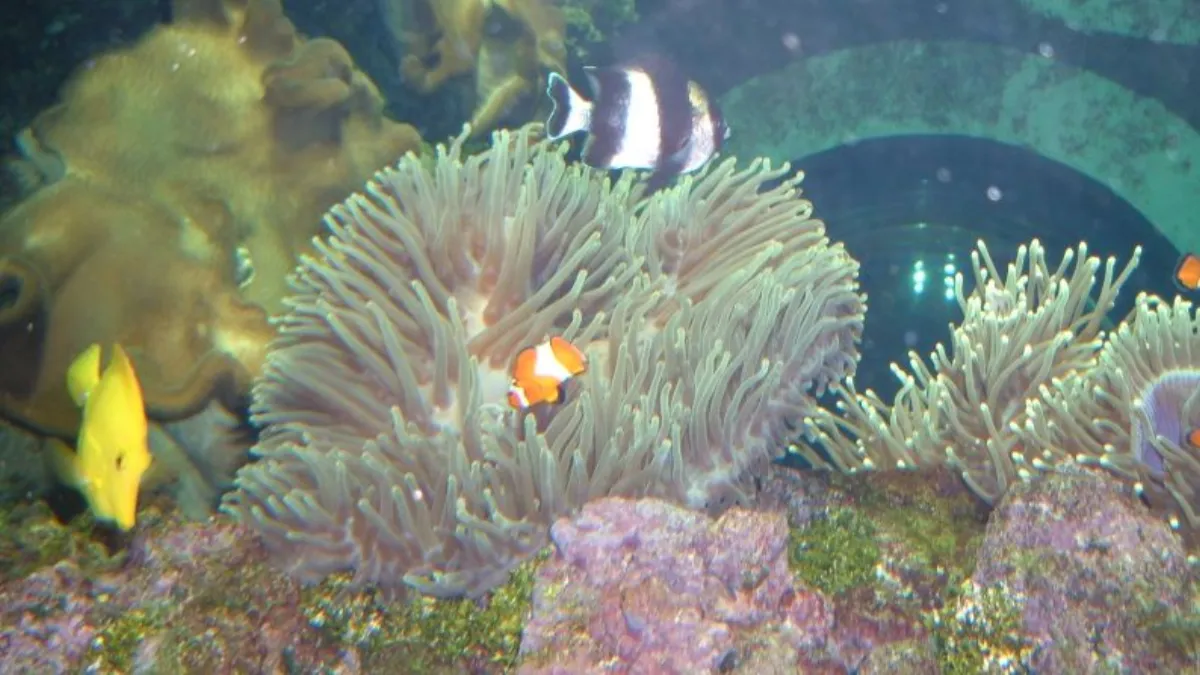
The yellow tang has a laterally compressed oval body, entirely bright yellow. Its dorsal fin is tall and continuous, and its tail is white. It has a sharp spine on each side of the caudal peduncle, used for defense. Juveniles are often solitary, while adults form groups. It is an essential algae grazer for reef balance. In the aquarium, it swims actively and needs plenty of space. It can become territorial towards other surgeonfish.
Habitat
Region :
The yellow tang inhabits clear, shallow coral reefs, often in groups near algae-growing areas. It frequents reef slopes and lagoons. The water is clear, warm, and well-oxygenated.
Distribution :
Recommended parameters
Care
Care notes
Keep in an aquarium of at least 300 L with stable seawater (salinity 1.020–1.025, pH 8.1–8.4, temperature 24–28 °C). Moderate lighting and good water flow are necessary. It is herbivorous: feed with dried algae (nori), blanched vegetables, and spirulina-enriched foods. Avoid aggressive tankmates. Regular water changes and a protein skimmer are recommended. Keep nitrates below 5 mg/L and phosphates below 0.05 mg/L.
Similar species
Espèces proches, même habitat ou même maintenance


