Blue tang
Paracanthurus hepatus
Family : Acanthuridae
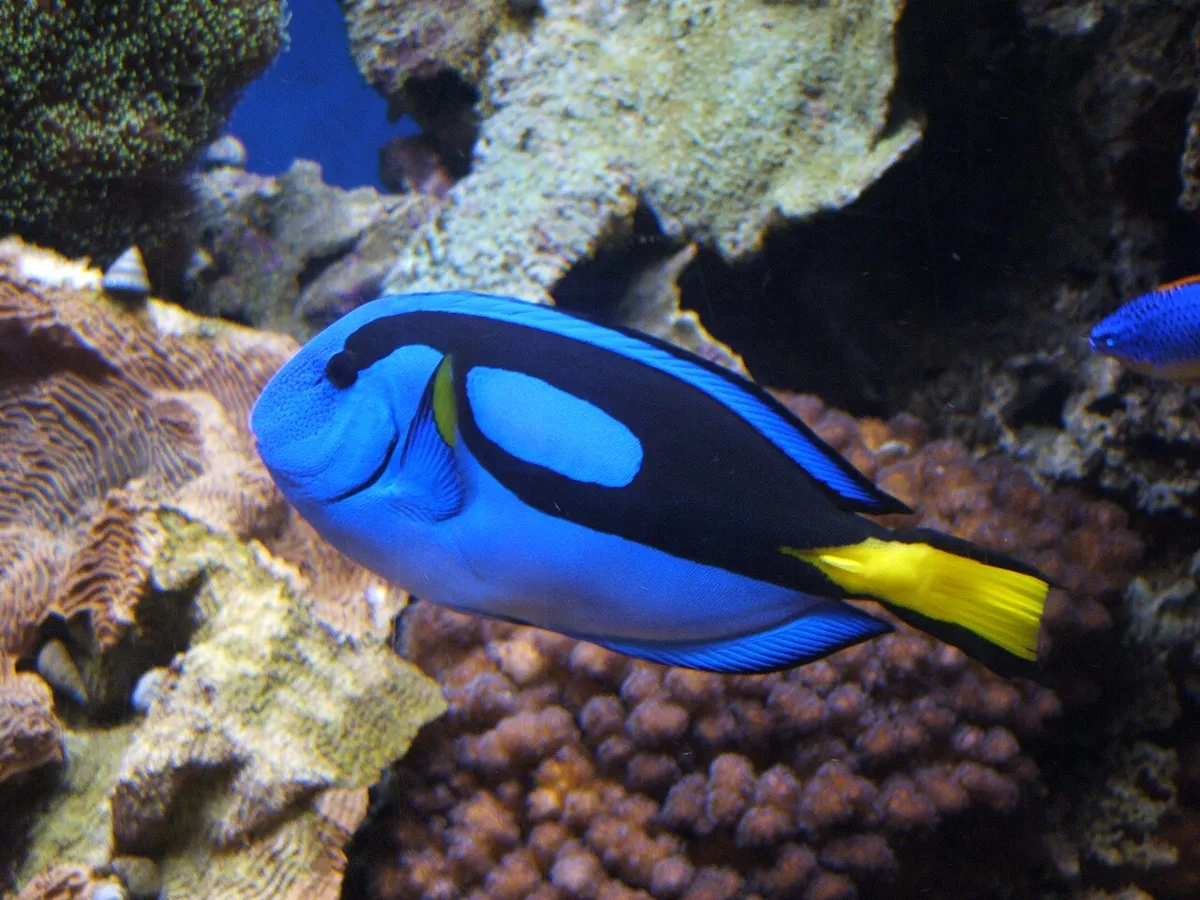
A surgeonfish with a royal blue body and yellow tail, made famous by the film Finding Nemo. Popular but requires a large aquarium.
Description
The blue tang has a compressed oval body, bright blue with a black band from the eye extending along the back. Its caudal fin is bright yellow. It reaches up to 30 cm. It is active and swims in schools in the wild. In the aquarium, it is generally peaceful but can become territorial. It is sensitive to ich and skin diseases. Its caudal spine is sharp. It needs a large volume to swim.
Habitat
Region :
The blue tang lives in coral reefs rich in corals, often in small groups near current areas. Juveniles hide in branching corals. The water is clear and warm.
Distribution :
Recommended parameters
Care
Care notes
Aquarium of at least 300 L, stable seawater (salinity 1.020–1.025, pH 8.1–8.4, temperature 24–28 °C). Herbivorous, feed with algae and vegetables. Good water flow and moderate lighting are necessary. Avoid aggressive tankmates. Quarantine is recommended. Regular water changes and a protein skimmer are important. Keep nitrates below 5 mg/L.
Similar species
Espèces proches, même habitat ou même maintenance


