Cauliflower coral
Pocillopora damicornis
Family : Pocilloporidae
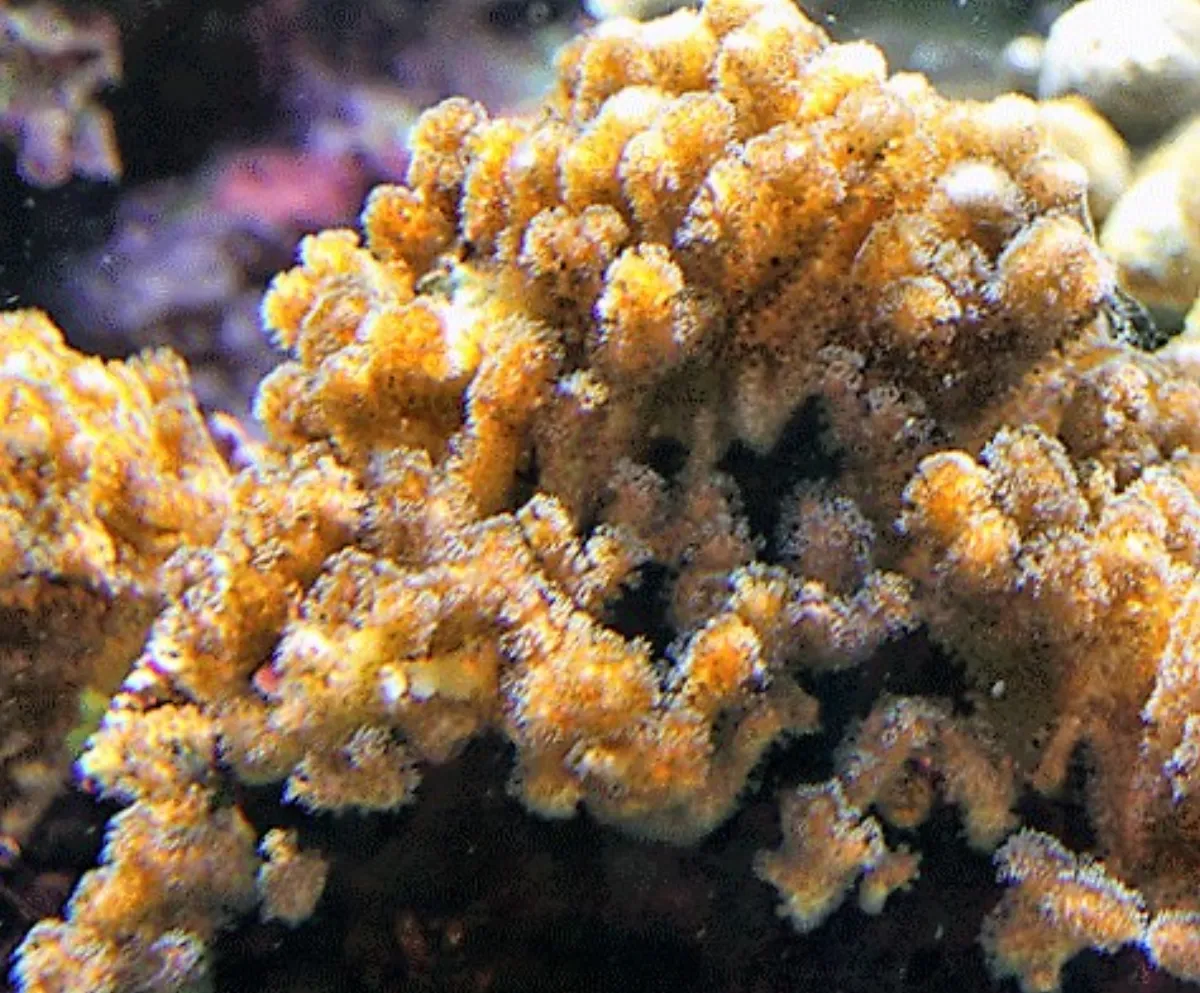
Cauliflower coral is a common SPS branching coral in reef aquariums, recognizable by its thick branches and prominent polyps. It is photosynthetic and requires intense lighting and moderate to strong flow.
Description
Pocillopora damicornis forms massive or branching colonies with thick, rounded branches resembling cauliflower. The polyps are large and often visible, with short tentacles. Coloration ranges from light brown to pink, green, or purple, often with lighter tips. It has sweeper tentacles that can damage neighboring corals. Sexual dimorphism is not apparent, but asexual reproduction by fragmentation is common.
Habitat
Region :
This coral is found primarily on shallow reefs and reef flats, often in areas with high water movement and intense light. It colonizes hard substrates and reef slopes down to about 20 meters depth. It also occurs in lagoons and areas with moderate to strong currents.
Distribution :
Recommended parameters
Care
Care notes
A minimum 100-liter tank is recommended, with intense lighting (LED or metal halide) and moderate to strong flow. Stable parameters are essential: temperature 24-28°C, pH 8.1-8.4, salinity 1.023-1.025, calcium 400-450 ppm, magnesium 1250-1350 ppm, alkalinity 8-12 dKH. Nitrates should remain below 5 ppm and phosphates below 0.05 ppm. It feeds mainly through photosynthesis but accepts microplankton. Beware of sweeper tentacles: space it at least 10 cm from other corals. Avoid sudden parameter swings.
Similar species
Espèces proches, même habitat ou même maintenance


