Derasa clam
Tridacna derasa
Family : Tridacnidae
The derasa clam is a large, colorful bivalve highly prized in reef aquariums for its symbiosis with zooxanthellae.
Description
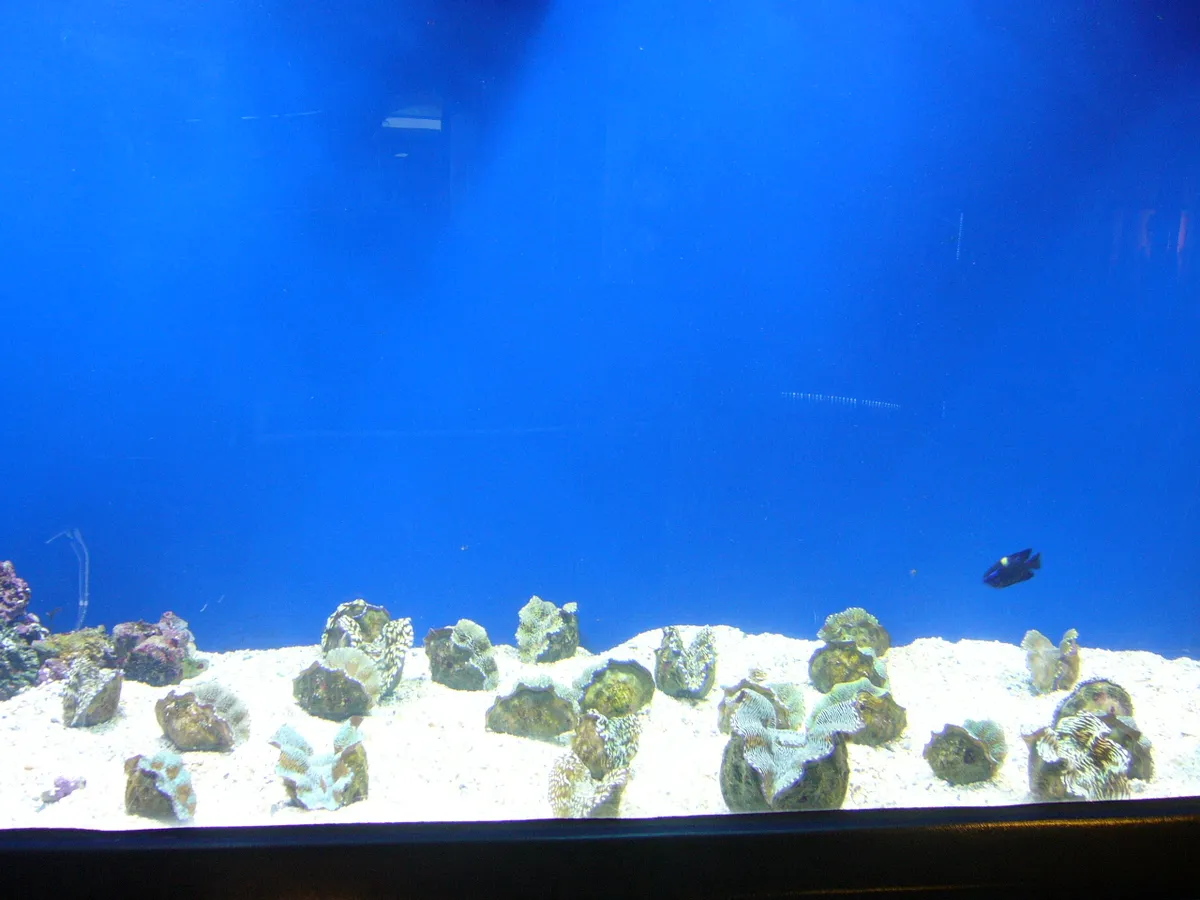
Tridacna derasa is a giant clam species reaching up to 40 cm. Its shell is thick with faint radial ribs. The mantle often displays wavy patterns in shades of green, blue, purple, or brown. Like all Tridacnidae, it hosts symbiotic algae (zooxanthellae) that provide most of its nutrition, supplemented by water filtration. It is considered vulnerable due to overexploitation for the aquarium trade and food.
Habitat
Region :
Coral reefs and shallow lagoons
Distribution :
Recommended parameters
Care
Care notes
Maintain very stable water with temperature 24-28°C, salinity 1.024-1.026, calcium 400-450 ppm, alkalinity 8-12 dKH, and nitrates <10 ppm. Intense lighting (LED or T5) is essential for the zooxanthellae. Place on a sandy substrate or flat rock at mid-height in the aquarium. Avoid strong direct currents. It is sensitive to parameter fluctuations and predators such as angelfish or crustaceans.
Similar species
Espèces proches, même habitat ou même maintenance

