Dwarf orange crayfish
Cambarellus patzcuarensis
Family : Cambaridae
A small freshwater crayfish with bright orange coloration, very popular in the aquarium hobby. It is threatened in its natural habitat.
Description
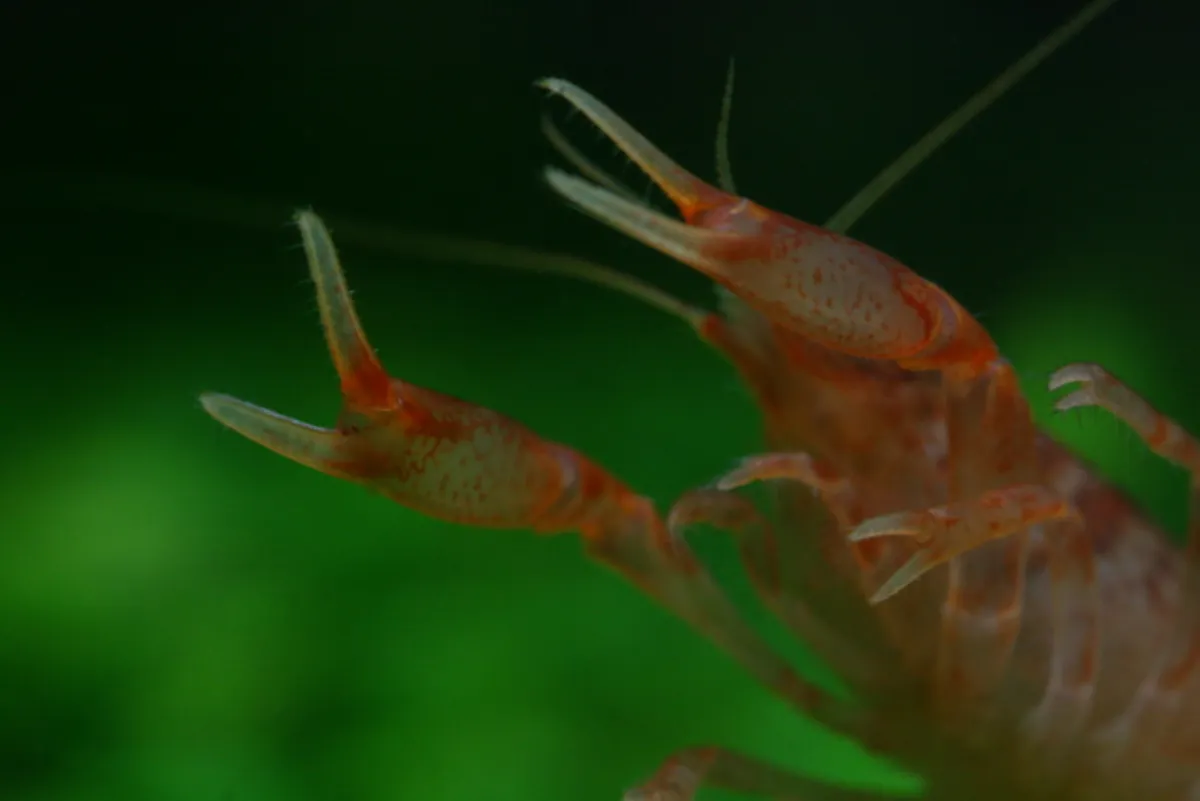
The dwarf orange crayfish reaches 4–5 cm as an adult. Its carapace is bright orange, sometimes with darker shades on the back. It has long antennae and slender claws. It is an active species that explores the substrate and hides in crevices. It is generally peaceful but can become territorial towards conspecifics. In the aquarium, it accepts a wide variety of foods. Reproduction is straightforward: the female carries eggs under her abdomen for about 3 weeks.
Habitat
Region :
This crayfish is endemic to Lake Pátzcuaro, a high-altitude lake with clear, shallow waters. It lives among rocks, roots, and dense aquatic vegetation. The substrate is muddy or sandy, and the water is slightly alkaline.
Distribution :
Recommended parameters
Care
Care notes
Keep in an aquarium of at least 30 L with soft to moderately hard water (pH 7–8, GH 5–10). The ideal temperature is 20–26 °C. A fine substrate and plenty of hiding places (rocks, roots, plants) are essential. The dwarf orange crayfish is omnivorous: it eats algae, vegetables, pellets, and animal protein. Avoid aggressive or large fish. Regular water changes are important to maintain good quality. Keep nitrates below 15 mg/L.
Similar species
Espèces proches, même habitat ou même maintenance


