Spotted hermit crab
Dardanus megistos
Family : Diogenidae
Large spotted hermit crab, very decorative but requires a large aquarium. It is active and hardy.
Description
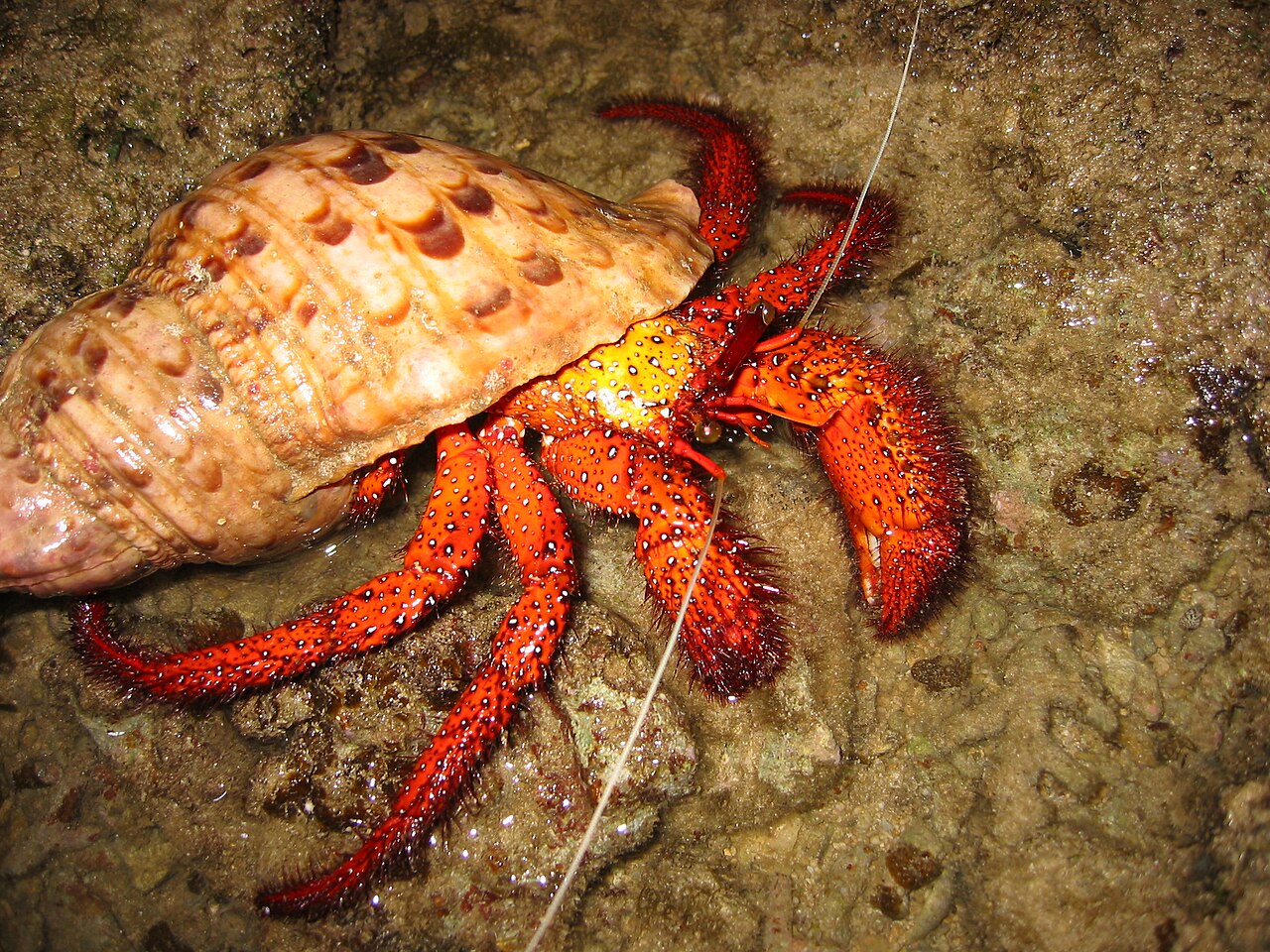
Dardanus megistos has bright red-orange legs and claws with white and black spots. It can reach 10 cm in length (excluding shell). It carries a large gastropod shell, often a conch or strombus. It is an omnivore feeding on algae, detritus, carrion, and small invertebrates. It is very active and can move rocks. It can be aggressive towards other crustaceans and small fish. It needs plenty of space and hiding places.
Habitat
Region :
Coral reefs, rocky areas, sandy bottoms
Distribution :
Recommended parameters
Care
Care notes
Parameters: temperature 24-28°C, pH 8.1-8.4, salinity 1.023-1.025, dKH 7-12. Diet: algae, meaty pellets, shrimp, mussels, fish pieces. A tank of at least 200 liters is necessary for an adult. It needs large empty shells (10-15 cm) to change into. Sandy substrate and plenty of rocks are essential. It is compatible with medium to large fish, but not with small fish or delicate invertebrates. It may uproot plants. Powerful filtration is required.
Similar species
Espèces proches, même habitat ou même maintenance


