Geophagus
Geophagus surinamensis
Family : Cichlidae
The geophagus is a substrate-sifting cichlid that sifts sand for food. It is appreciated for its interesting behavior and subtle colors.
Description
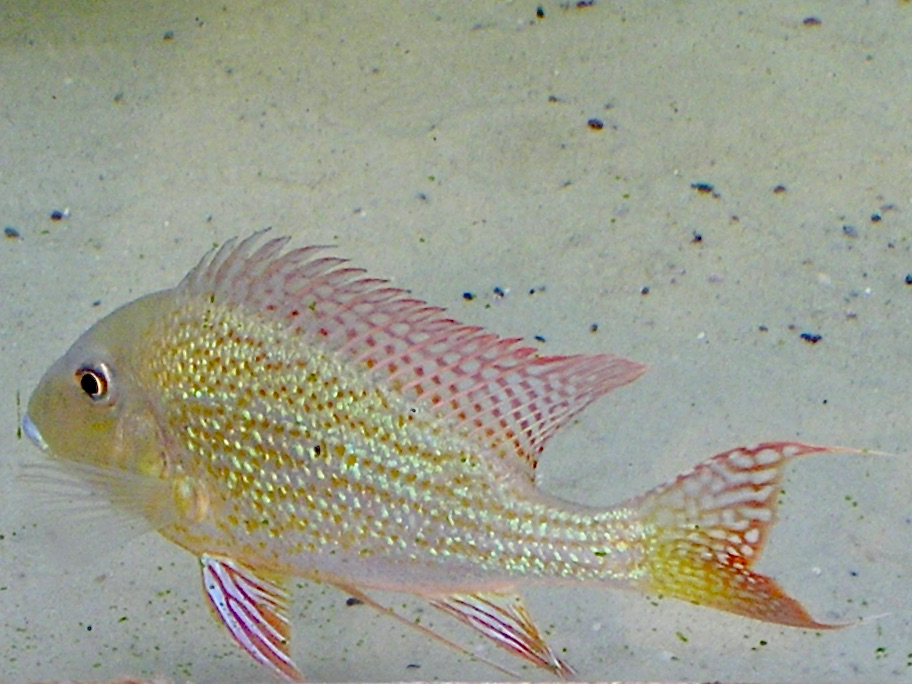
Geophagus surinamensis has an elongated, laterally compressed body with a pointed head. Adults reach about 15 cm. Coloration is silvery to golden with bluish highlights and a black spot on the operculum. Fins are often edged in red or blue. They are peaceful fish that live in small groups. They spend their time sifting sand for food. Reproduction is on substrate, with parents guarding eggs and fry.
Habitat
Region :
Sandy bottoms of rivers and creeks in Suriname and French Guiana.
Distribution :
Recommended parameters
Care
Care notes
A tank of at least 150 L is needed, with a fine sand substrate to allow sifting. Ideal temperature is 24 to 28 °C, pH 6.5 to 7.5, and GH 5 to 12 °d. Efficient filtration is important as they stir up the substrate. They are omnivorous: pellets, flakes, frozen foods, and live food. Compatible tankmates: tetras, corydoras, other peaceful cichlids. Avoid aggressive bottom-dwellers. Breeding is possible with a formed pair.
Similar species
Espèces proches, même habitat ou même maintenance


