Angelfish
Pterophyllum scalare
Family : Cichlidae
The angelfish is an iconic South American cichlid, recognizable by its triangular shape and long fins. It is very popular in the aquarium hobby.
Description
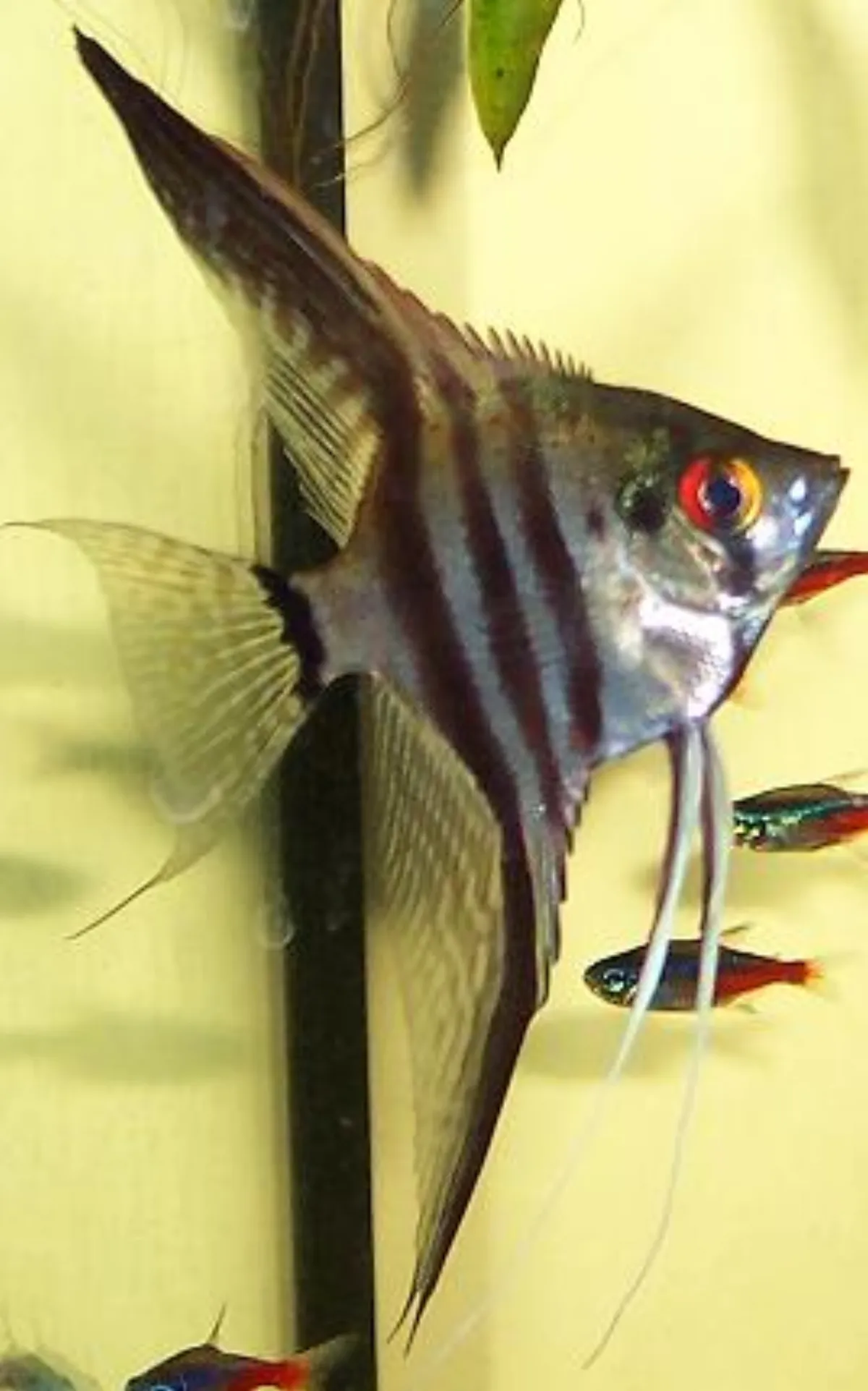
The angelfish has a tall, laterally compressed body with highly developed dorsal and anal fins. Its silvery coloration is crossed by dark vertical bars, but many captive varieties exist (marble, black, veil). It is a calm but territorial fish during breeding. It forms monogamous pairs and spawns on vertical surfaces. Adults can reach 15 cm in height and 20 cm in length.
Habitat
Region :
The angelfish inhabits calm, shallow waters of the Amazon basin, especially flooded forests (várzea) and areas with dense vegetation. It stays among submerged roots and aquatic plants, where it finds shelter and food. The water is acidic, very soft, and often tinted by tannins.
Distribution :
Recommended parameters
Care
Care notes
Keep angelfish in an aquarium of at least 200 L with significant water height (minimum 50 cm). Water should be acidic (pH 6.0-6.5) and very soft (GH 3-8). Ideal temperature is between 26 and 30°C. Provide a setup with roots, tall plants, and subdued lighting. They are omnivorous: accept flakes, pellets, artemia, and bloodworms. Avoid overly active or aggressive tankmates; prefer peaceful fish like tetras or corydoras. Efficient filtration is needed, but avoid strong current.
Similar species
Espèces proches, même habitat ou même maintenance


