Reticulated nassarius
Nassarius reticulatus
Family : Nassariidae
Very active scavenger snail, buries in sand and emerges to feed. Excellent cleaner of organic waste.
Description
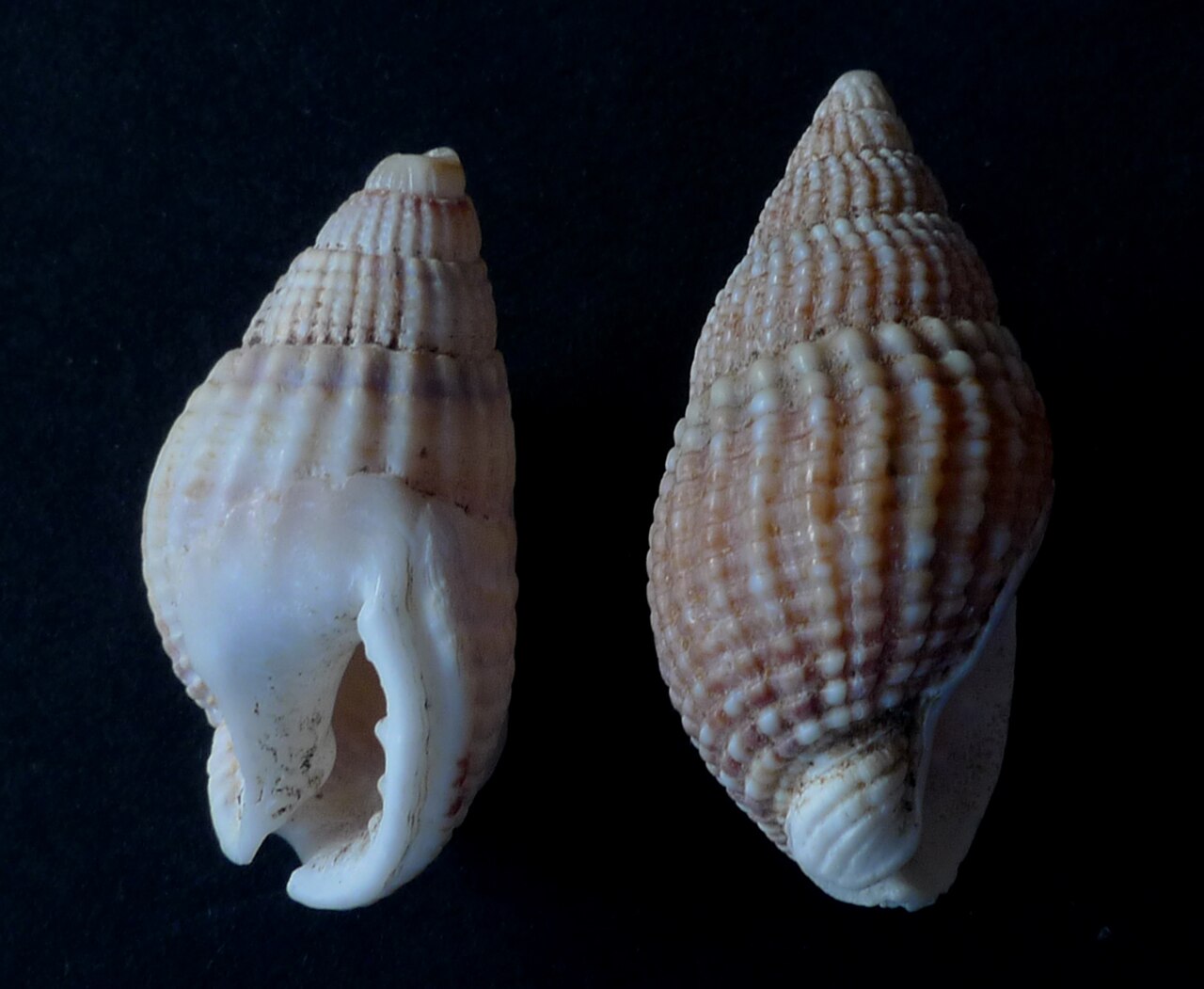
The shell of Nassarius reticulatus is oval-conical, cream to light brown with a network of fine brown reticulated lines. It reaches up to 3 cm. The foot is broad and muscular, light grey with black spots. It has a long thin siphon to detect food odors. It is an opportunistic scavenger feeding on carcasses, leftover food, and small invertebrates. It is very active and can be seen crawling on the sand in search of food. It buries quickly in the sand when disturbed.
Habitat
Region :
Sandy and muddy bottoms, shallow coastal areas
Distribution :
Recommended parameters
Care
Care notes
Parameters: temperature 22-28°C, pH 8.1-8.4, salinity 1.023-1.025, dKH 7-12. Diet: pieces of fish, shrimp, mussels, meaty pellets. A tank of at least 30 liters is recommended for a small group. It is compatible with peaceful fish and other invertebrates. Avoid fish that eat them (triggerfish, pufferfish). A deep sandy substrate (5-10 cm) is necessary for burrowing. It can be kept in groups. It is sensitive to high nitrates. Efficient filtration is important as it produces waste.
Similar species
Espèces proches, même habitat ou même maintenance


