Nassarius snail
Nassarius vibex
Family : Nassariidae
The nassarius snail is a marine detritivore highly valued in reef aquariums for cleaning up leftover food and organic waste.
Description
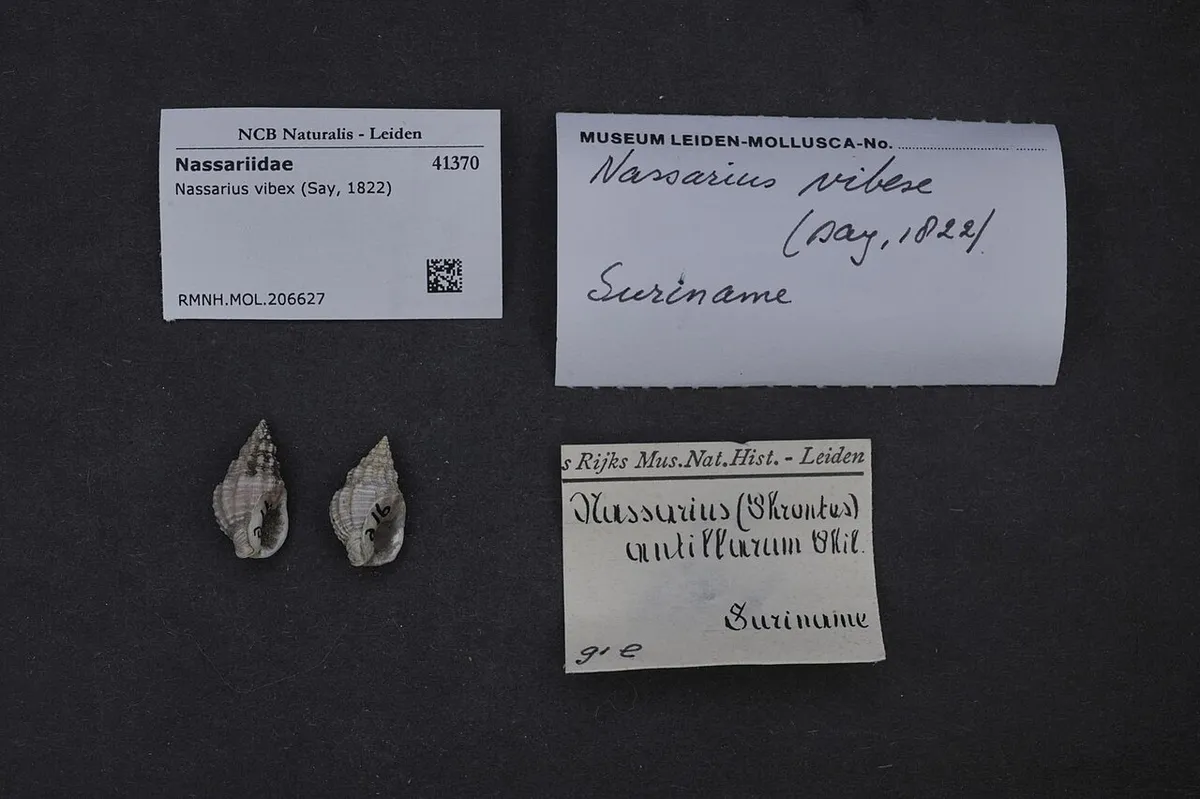
Nassarius vibex typically reaches 2–3 cm in length. Its conical shell features prominent spiral ridges and an oval aperture. Coloration ranges from light brown to cream with darker markings. It has a long siphon used to detect food. This nocturnal animal spends the day buried in sand. There is no obvious sexual dimorphism.
Habitat
Region :
This marine gastropod inhabits sandy bottoms, seagrass beds, and mangroves in shallow waters. It buries in the sand during the day and emerges at night to feed. It is commonly found in intertidal and subtidal zones down to 30 meters depth.
Distribution :
Recommended parameters
Care
Care notes
A minimum tank size of 10 gallons (38 L) is adequate, but larger is better. A sandy substrate at least 2 inches deep is essential for burrowing. Parameters: temperature 22-26°C, pH 8.1-8.4, salinity 1.023-1.025. This peaceful detritivore feeds on leftover food, carrion, and organic matter. It can be kept in groups. Compatible with all reef fish and invertebrates. Avoid predatory shrimp or fish that may harass it.
Similar species
Espèces proches, même habitat ou même maintenance


