Caudal-spot cichlid
Neolamprologus caudopunctatus
Family : Cichlidae
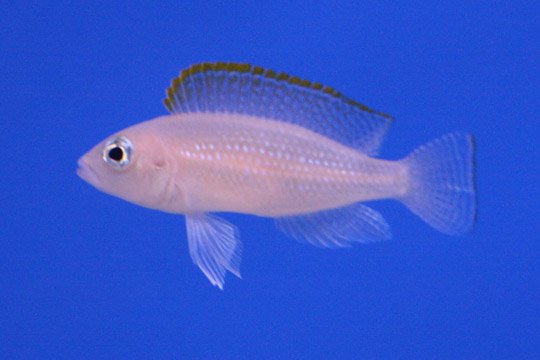
The Caudal-spot cichlid is a small peaceful cichlid recognizable by the black spot on its caudal fin. It lives in groups and is suitable for community aquariums.
Description
This modest-sized cichlid (8-10 cm) has an elongated body of beige to light gray color, with a characteristic black spot on the upper part of the caudal fin. The fins are often edged with blue. It is a gregarious species that lives in schools in the wild, which reduces aggression. It is less territorial than other Neolamprologus and can coexist with peaceful fish of similar size. Its diet is omnivorous, including small crustaceans, insects, and algae. Breeding occurs in rock cavities, with parents protecting the fry.
Habitat
Region :
Rocky and sandy areas of Lake Tanganyika
Distribution :
Recommended parameters
Care
Care notes
Water parameters: temperature 24-26°C, pH 7.8-9.0, GH 10-20, KH 10-20. Moderate filtration and regular water changes are sufficient. Feed a varied diet: flakes, pellets, brine shrimp, daphnia, and blanched vegetables. A tank of at least 80 liters is recommended for a group of 6-8 individuals. Decorate with rocks and sand, along with robust plants like Anubias. It is a peaceful species that can be kept with other peaceful Tanganyikan cichlids or community fish of medium size. Breeding is possible in the aquarium, with parents being good guardians. Avoid very active or aggressive fish.
Similar species
Espèces proches, même habitat ou même maintenance


