Five-bar cichlid
Neolamprologus tretocephalus
Family : Cichlidae
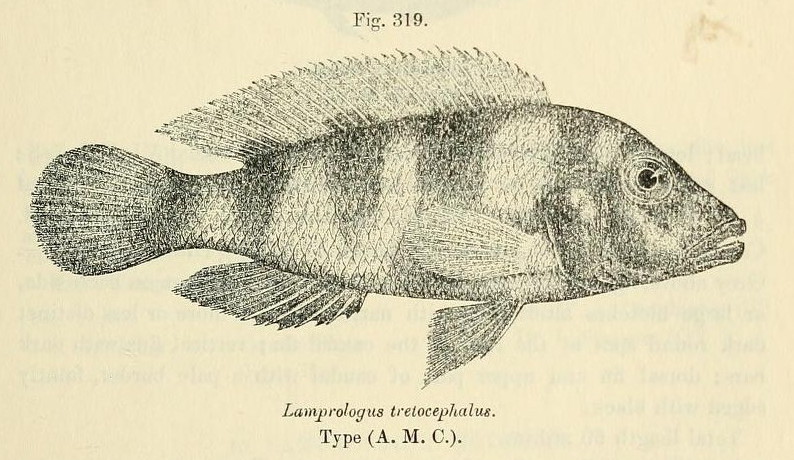
The Five-bar cichlid is a Tanganyikan cichlid recognizable by its five vertical dark bars. It is a territorial fish that requires a species-specific aquarium.
Description
This cichlid has an elongated and laterally compressed body, with a cream-white base color and five well-defined vertical black bars. The fins are often tinted light blue, and males develop filamentous extensions on the dorsal fin. It is territorial and forms monogamous pairs that vigorously defend their spawning site. In the wild, it inhabits rocky and sandy areas where it digs cavities to breed. It is an opportunistic predator that hunts small invertebrates and fish. Adult size reaches about 12 cm.
Habitat
Region :
Rocky and sandy areas of Lake Tanganyika
Distribution :
Recommended parameters
Care
Care notes
Maintain a temperature of 24-26°C, pH 7.8-9.0, and high hardness (GH 10-20, KH 10-20). The water must be well oxygenated and filtered, with regular water changes. Feed a carnivorous diet: live or frozen foods (brine shrimp, bloodworms, small fish) and a quality pellet. A minimum tank volume of 150 liters is recommended for a pair. Decorate the aquarium with rocks and fine sand to mimic its natural habitat. Avoid keeping it with very small or shy fish, as it can be aggressive. Compatibility is possible with other robust Tanganyikan cichlids of similar size. Breeding occurs on a rocky substrate or in a cavity, with parents guarding eggs and fry.
Similar species
Espèces proches, même habitat ou même maintenance


