Superb brittle star
Ophiolepis superba
Family : Ophiolepididae
The superb brittle star is a delicate starfish with slender arms, highly valued in reef aquariums for its scavenging role.
Description
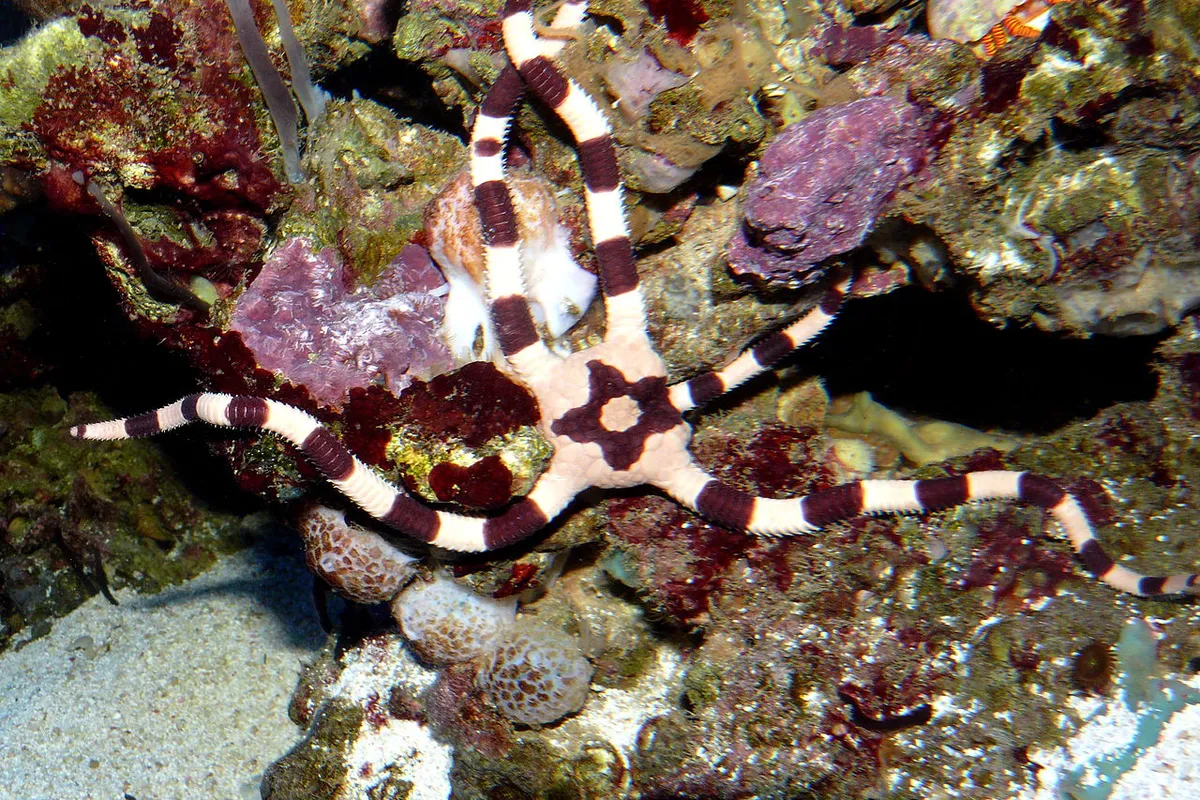
Ophiolepis superba has a pentagonal central disc 1–2 cm in diameter, covered with fine imbricate scales. Its five very long, slender arms can reach 15 cm in span, with short, regular lateral spines. Coloration is light brown to beige, with darker transverse bands on the arms. It is a nocturnal and secretive species, hiding during the day. Sexual dimorphism is not apparent.
Habitat
Region :
The superb brittle star inhabits shallow coral reefs, reef flats, and sandy areas rich in debris. It is often found under rocks or in crevices, where it hides during the day. It prefers clear, well-oxygenated waters with a soft or rocky substrate. At night, it emerges to feed on detritus and small prey.
Distribution :
Recommended parameters
Care
Care notes
A tank of at least 80 liters is recommended for this brittle star, with a sandy or rocky substrate and plenty of hiding places. Water parameters should be stable: temperature 24-28°C, pH 8.1-8.4, salinity 1.023-1.025. It feeds on detritus, leftover food, and small prey; supplemental feeding with finely chopped meaty foods is beneficial. Compatible with most reef fish and invertebrates, but avoid very small shrimp or fish that might stress it. Be cautious with pumps and filters: arms can get caught.
Similar species
Espèces proches, même habitat ou même maintenance


