Candy cane coral
Caulastrea furcata
Family : Faviidae
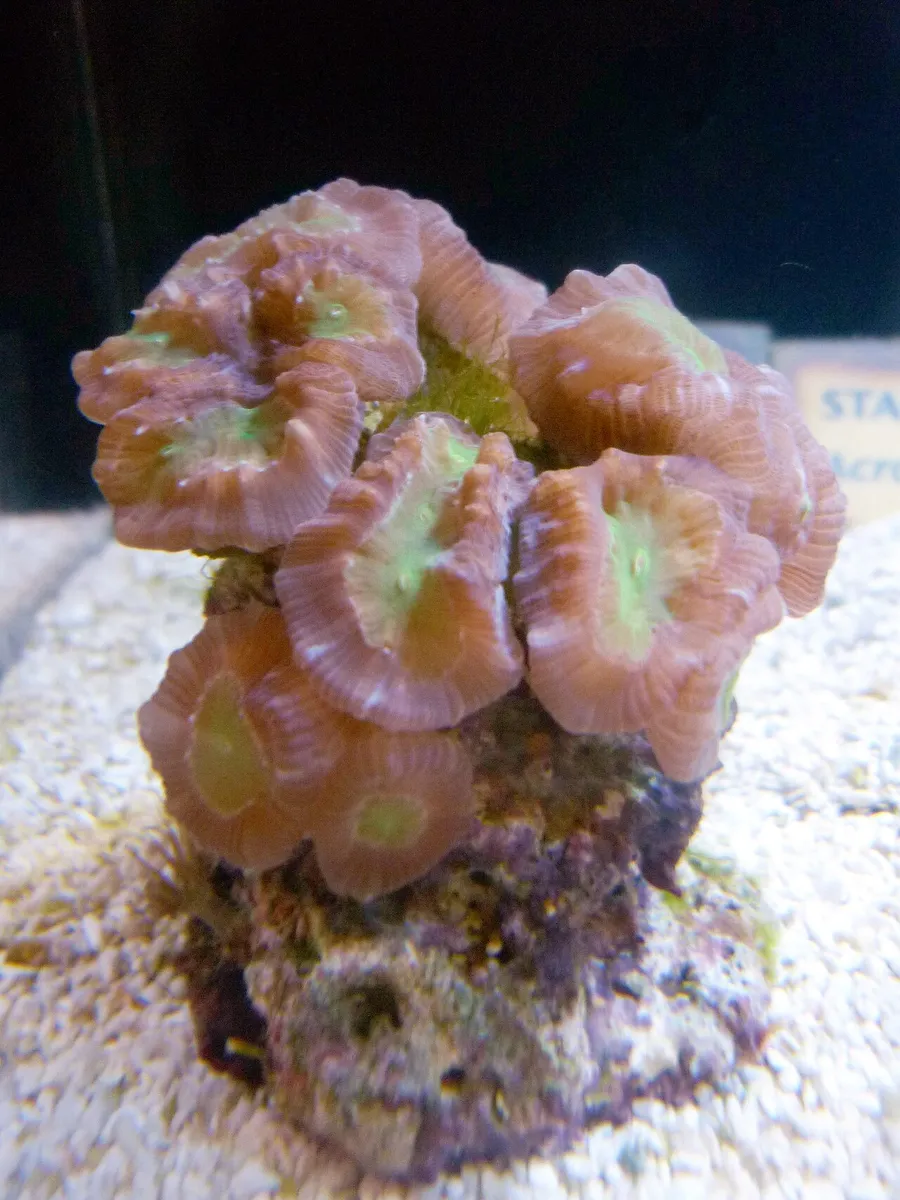
Candy cane coral (Caulastrea furcata) is a hardy LPS coral with fleshy polyps, often green or brown with fluorescent centers. Easy to keep, it is suitable for beginner reef aquarists.
Description
Caulastrea furcata forms phaceloid colonies where each polyp is separated by a calcified stalk. Polyps reach up to 2-3 cm in diameter and are fleshy, with well-defined septa. Coloration ranges from green to brown, with centers often fluorescent green or bluish. At night, it extends long stinging tentacles to capture prey. There is no apparent sexual dimorphism. It is a moderate-growing species.
Habitat
Region :
Caulastrea furcata is found on reef slopes and in turbid waters, often on hard substrates or rubble. It prefers areas with low flow and moderate lighting. This species forms phaceloid colonies with well-separated fleshy polyps.
Distribution :
Recommended parameters
Care
Care notes
A minimum 80-liter tank is recommended for a small frag. Maintain temperature 24-27°C, pH 8.1-8.4, salinity 1.023-1.025, calcium >400 mg/L, magnesium >1300 mg/L, and KH 8-12 dKH. Lighting should be moderate (PAR 100-200) and flow low to moderate. Feed planktonic foods or micro-particles 1-2 times per week. Beware of nocturnal stinging tentacles: space at least 10 cm from other corals. Easy to frag.
Similar species
Espèces proches, même habitat ou même maintenance


