Hammer coral
Euphyllia ancora
Family : Euphylliidae
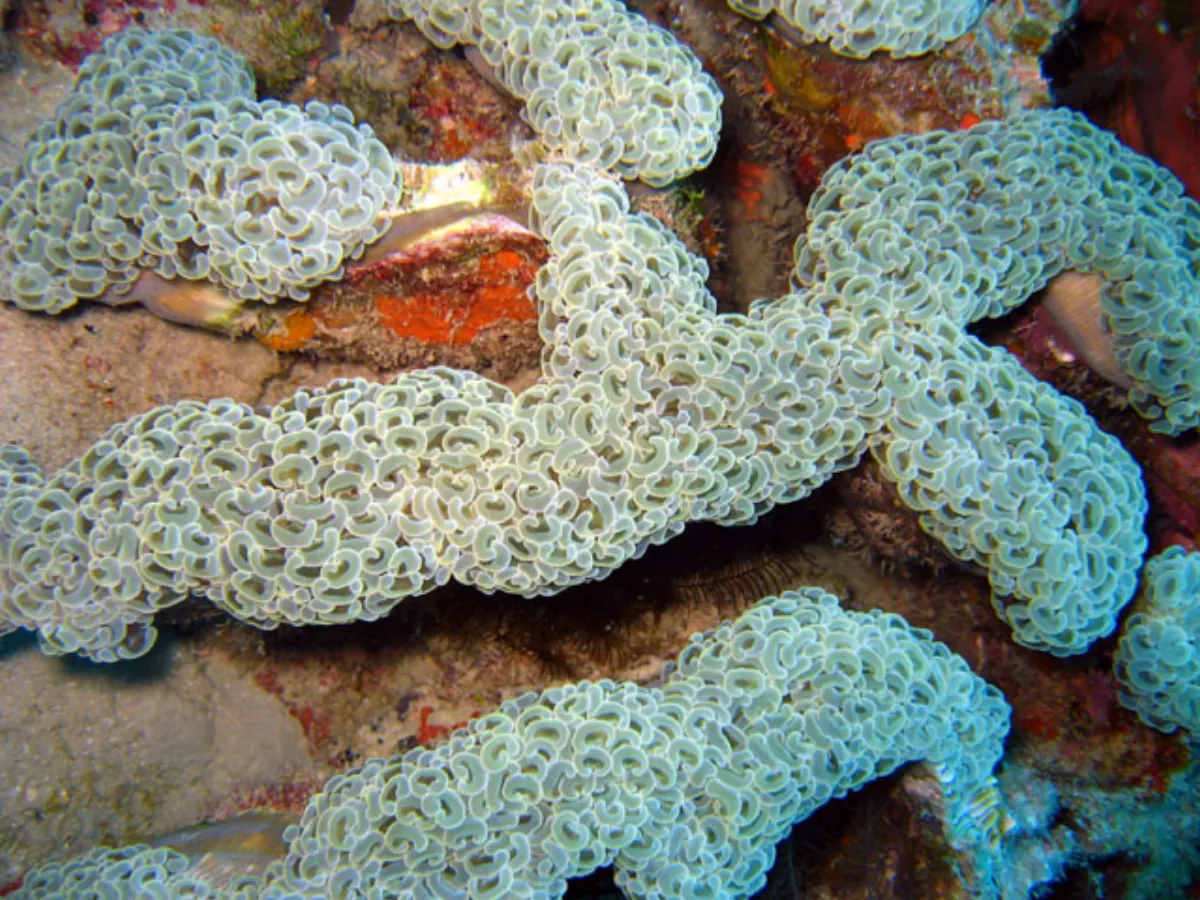
Hammer coral is a popular LPS in reef aquariums, recognizable by its hammer- or anchor-shaped polyps. It is photosynthetic but can also capture prey.
Description
Euphyllia ancora forms massive or dome-shaped colonies, with fleshy polyps ending in hammer- or anchor-shaped tentacles (sometimes T-shaped or anchor-like). Color ranges from green to brown, often with fluorescent tips (green, blue, purple). Polyps can reach up to 5 cm in length. The colony can grow to 30 cm in diameter. It possesses stinging sweeper tentacles that extend at night to defend its space. No visible sexual dimorphism.
Habitat
Region :
Euphyllia ancora is found primarily on reef slopes and in calm lagoons across the Indo-Pacific. It prefers areas with good lighting but moderate water flow. It often forms large colonies on hard substrates. Clear, oligotrophic waters are typical of its habitat.
Distribution :
Recommended parameters
Care
Care notes
A minimum 100-liter tank is recommended for a small frag, but an adult colony needs 200 liters or more. Temperature 24-28°C, pH 8.1-8.4, salinity 1.023-1.025. Moderate lighting (PAR 100-200) and moderate flow. It is sensitive to parameter swings, especially stable alkalinity (8-12 dKH). It can be fed small prey (brine shrimp, mysis) once or twice a week. Beware of stinging sweeper tentacles: leave at least 15 cm of space from other corals. Avoid fish that nip at polyps (butterflyfish, angelfish).
Similar species
Espèces proches, même habitat ou même maintenance


