Pulsing xenia
Xenia elongata
Family : Xeniidae
Xenia elongata is a popular pulsing soft coral in reef aquaria, known for its rhythmic polyp movement. It is easy to keep and propagates quickly.
Description
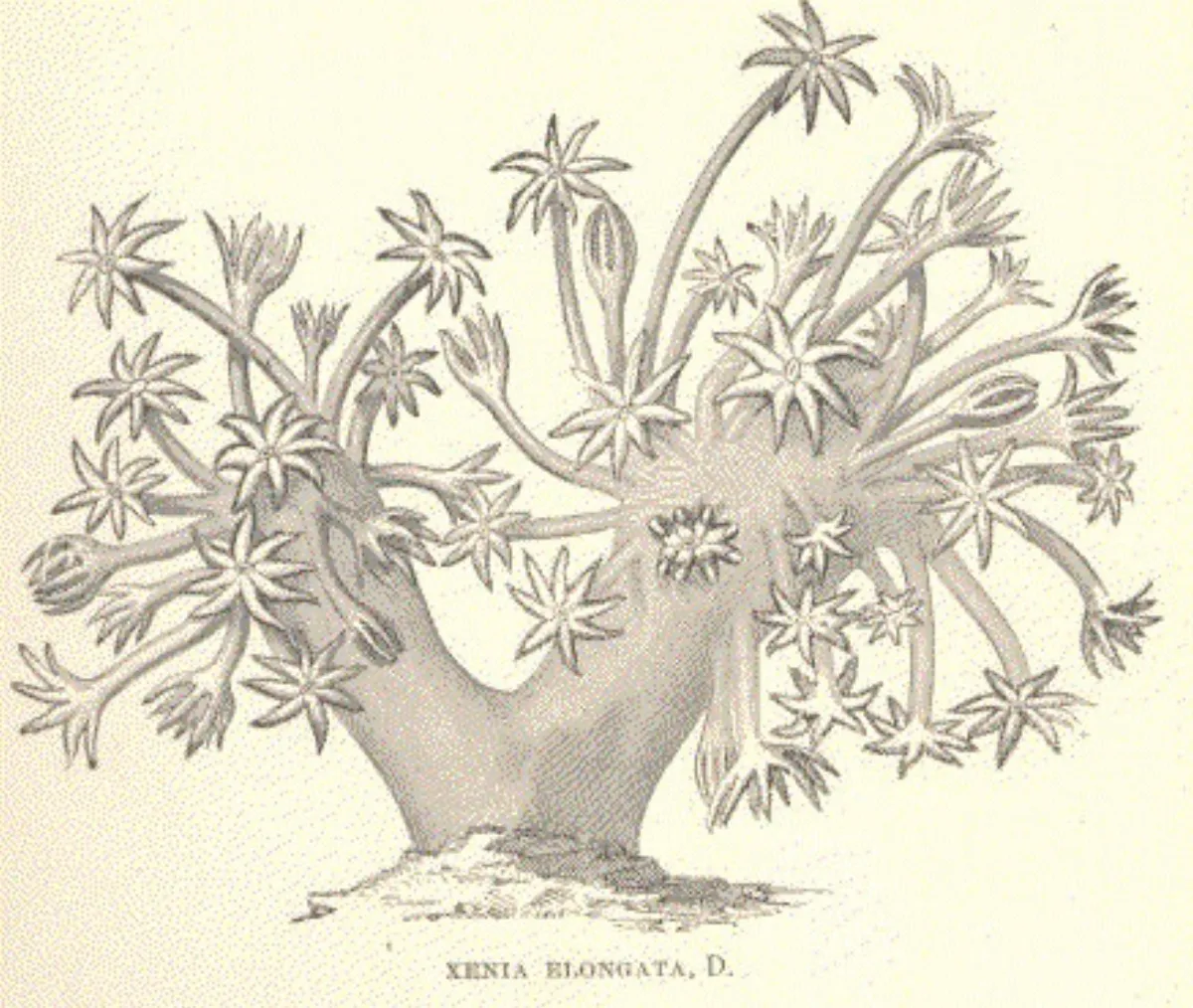
Xenia elongata forms upright colonies with elongated polyps reaching 2–3 cm in height. Each polyp has eight feathery tentacles (pinnules) arranged in a crown, colored from white to light brown, often with violet or pink hues. The characteristic pulsing motion results from rhythmic contraction and expansion of the polyps, likely aiding gas exchange and nutrient uptake. Colonies can spread rapidly across surrounding rockwork. No obvious sexual dimorphism, but asexual reproduction by budding is common.
Habitat
Region :
Xenia elongata is found in shallow reef environments, often on reef flats and upper slopes with moderate water movement. It colonizes hard substrates such as dead coral rock and rubble, forming dense mats. The species is particularly abundant in nutrient-rich, well-lit areas.
Distribution :
Recommended parameters
Care
Care notes
A minimum 80-liter tank is recommended for Xenia elongata. Stable water parameters are essential: temperature 24-27°C, pH 8.1-8.4, salinity 1.023-1.025, nitrates <10 ppm, phosphates <0.1 ppm. Moderate to intense lighting and low to moderate flow are required. It relies primarily on photosynthesis via its zooxanthellae but benefits from supplemental phytoplankton or liquid coral food. Caution: this species can become invasive and overgrow other corals if not controlled.
Similar species
Espèces proches, même habitat ou même maintenance


